
If you’ve started collecting quotes for a bathroom remodel in Fairfax County, the numbers probably don’t line up. One contractor quotes $18,000, another quotes $55,000 — for what sounds like the same small hall bath. A neighbor mentions she redid her powder room for $9,000; a coworker just finished a primary bath for $110,000. Both numbers can be right, because “bathroom remodel” describes a dozen genuinely different projects wearing the same name.
Bathroom costs in Northern Virginia come down to a short list of specific, knowable decisions: the size and type of bathroom, whether plumbing moves, the tile and stone you choose, the fixtures you select, and who does the work. Once those five decisions are on the table, the pricing stops feeling arbitrary and starts feeling like a menu you control — which is exactly the goal of this guide.
At Kitchen Design Center in Fairfax, we design and remodel bathrooms across the county every week, from powder-room refreshes to full primary-suite spa conversions, alongside the kitchen projects we’re known for. This is the same conversation we have with homeowners at our showroom table: real 2026 numbers, real trade-offs, and the places where spending more — or less — actually makes sense.
The Short Answer: What Fairfax County Homeowners Pay in 2026
Most full bathroom remodels in Fairfax County land between $22,000 and $65,000 in 2026, with the exact number depending heavily on bathroom type — a powder room and a primary suite are not the same project wearing different tile.
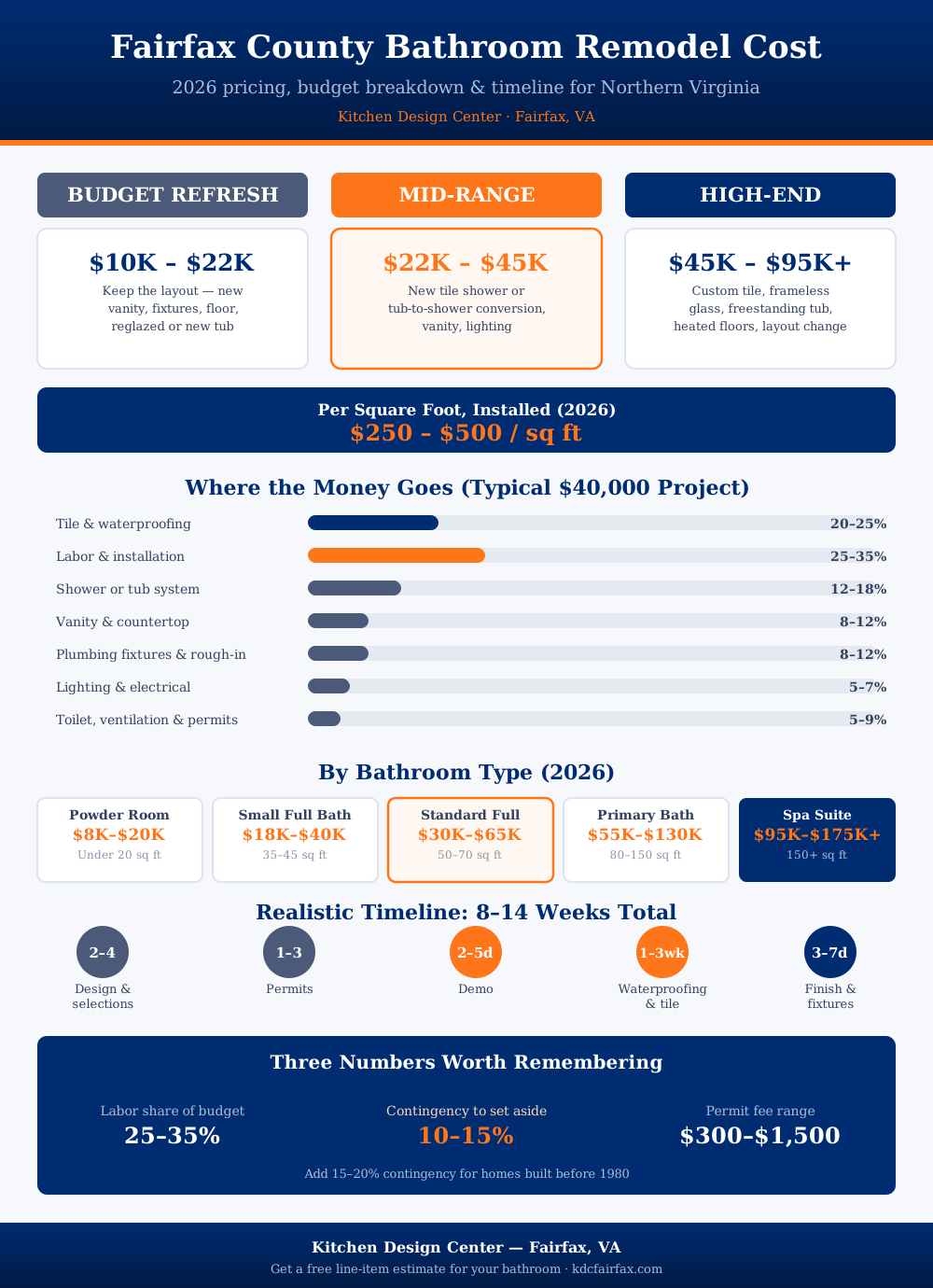
Here’s how the market breaks down by project level:
| Project Level | Typical Cost (2026) | What’s Included |
|---|---|---|
| Budget refresh | $10,000 – $22,000 | Same layout; new vanity, fixtures, floor tile, reglazed or replacement tub, paint |
| Mid-range remodel | $22,000 – $45,000 | New tiled shower or tub-to-shower conversion, new vanity, flooring, lighting, moderate plumbing |
| High-end remodel | $45,000 – $95,000+ | Custom tile work, frameless glass, freestanding tub, heated floors, layout or structural changes |
The most useful early-planning number is the per-square-foot range: $250 to $500 per square foot for a full remodel. That’s noticeably higher than kitchen per-square-foot pricing, and there’s a reason — a bathroom’s fixed costs (plumbing rough-in, waterproofing, a shower pan, a toilet) don’t shrink just because the room is small. A 40-square-foot hall bath still needs the same trades and most of the same fixtures as a 70-square-foot one.
Cost by Bathroom Type
Bathroom size matters less than bathroom type, because a powder room, a hall bath, and a primary suite each carry a fundamentally different fixture list.
| Bathroom Type | Typical Size | Typical 2026 Cost Range |
|---|---|---|
| Powder room / half bath | Under 20 sq ft | $8,000 – $20,000 |
| Small full bath (hall bath) | 35 – 45 sq ft | $18,000 – $40,000 |
| Standard full bath | 50 – 70 sq ft | $30,000 – $65,000 |
| Primary bath | 80 – 150 sq ft | $55,000 – $130,000 |
| Primary spa suite | 150+ sq ft | $95,000 – $175,000+ |
Two notes on reading this table. First, a powder room’s small footprint doesn’t make it cheap — there’s no tub or shower, but every dollar goes toward a smaller number of higher-visibility finishes (vanity, mirror, lighting, wallpaper or tile), so cost per square foot is often the highest of any category. Second, primary spa suites frequently include a separate soaking tub and a walk-in shower, dual vanities, and radiant floor heat — effectively two bathrooms’ worth of plumbing and tile in one room.
Typical bathrooms we see across the county: powder rooms and hall baths dominate in Alexandria, Arlington, and Falls Church townhomes and older colonials; standard full baths are the workhorse project in Burke, Springfield, and Annandale; and primary spa suites are increasingly common in Vienna, Oakton, McLean, and Great Falls.
The Complete Budget Breakdown: Where Every Dollar Goes
Here’s how a typical Fairfax County bathroom budget distributes in 2026, using a $40,000 mid-range remodel as the example:
| Category | Share of Budget | On a $40,000 Project |
|---|---|---|
| Tile & waterproofing | 20 – 25% | $8,000 – $10,000 |
| Labor & installation | 25 – 35% | $10,000 – $14,000 |
| Shower or tub system | 12 – 18% | $4,800 – $7,200 |
| Vanity & countertop | 8 – 12% | $3,200 – $4,800 |
| Plumbing fixtures & rough-in | 8 – 12% | $3,200 – $4,800 |
| Lighting & electrical | 5 – 7% | $2,000 – $2,800 |
| Toilet | 2 – 4% | $800 – $1,600 |
| Ventilation (exhaust fan) | 1 – 2% | $400 – $800 |
| Permits & design fees | 2 – 4% | $800 – $1,600 |
Let’s walk through the categories that carry the most weight — and the most decisions.
Tile & Waterproofing: The Biggest Line Item, and the Least Visible
Tile is the largest single material cost in most bathroom remodels, and roughly a third of what you’re paying for never shows: the waterproofing membrane, the mud bed or backer board, and the slope work that keeps water moving toward the drain instead of into your subfloor. Skimping here is the single most expensive mistake in bathroom remodeling, because failures show up eighteen months later as a soft floor or a stain on the ceiling below — not as a visible flaw on install day.
| Tile Type | Installed Cost per Sq Ft (2026) | Notes |
|---|---|---|
| Ceramic | $8 – $15 | Budget-friendly; wide color range; softer than porcelain |
| Porcelain | $10 – $20 | Most popular choice in 2026; dense, low-maintenance, wide format options |
| Large-format porcelain slab | $20 – $40 | Fewer grout lines; increasingly common for shower walls |
| Natural stone (marble, travertine) | $15 – $35 | Elegant but porous; needs periodic sealing |
| Handmade / zellige tile | $30 – $60 | Artisan look; popular 2026 accent choice; higher install labor |
| Mosaic (shower floor, accent) | $15 – $45 | Small-format pieces mean more setting labor per square foot |
A standard shower surround runs 60–100 square feet of tile once you count walls and floor; a full-bathroom tile job (shower plus floor) commonly lands between $4,000 and $12,000 in material and labor combined, before the mosaic accent or the full-height wall that pushes it higher.
Shower or Tub System: The Decision That Shapes the Room
| Shower/Tub Option | Typical 2026 Cost (installed) | Notes |
|---|---|---|
| Prefab tub/shower combo | $1,500 – $4,000 | Fastest, most budget-friendly; limited design flexibility |
| Tiled shower, standard glass | $6,000 – $12,000 | The mid-range default; framed or semi-frameless door |
| Tiled shower, frameless glass + niche + bench | $10,000 – $20,000 | The 2026 upper-mid standard; curbless option adds cost |
| Freestanding soaking tub | $3,500 – $11,000 | Fixture plus dedicated plumbing; a primary-bath signature |
| Curbless / wet room (fully tiled, no threshold) | $15,000 – $30,000+ | Requires floor structure modification; the top aging-in-place feature |
Curbless, walk-in showers are the most requested single upgrade we see in 2026 — they read as spa-modern, and they quietly future-proof the bathroom for aging in place without looking clinical. The cost premium over a standard curb shower is real (typically $3,000–$6,000 more, mostly in floor framing and drain relocation), but it’s increasingly treated as a standard spec in primary-bath remodels rather than a specialty request.
Vanity & Countertop: Furniture for a Wet Room
| Vanity Grade | Typical 2026 Cost | What You Get |
|---|---|---|
| Stock vanity (24“–36“) | $300 – $900 | Fixed sizes; limited finish menu; fastest availability |
| Semi-custom vanity | $900 – $2,500 | Modified sizing, wider finish selection, upgraded hardware |
| Custom furniture-style vanity | $2,500 – $6,000+ | Built to your dimensions; matches custom cabinetry construction standards |
Vanity countertops price the same way kitchen counters do — quartz remains the volume choice for its stain resistance in a humidity-heavy room, while quartzite and marble show up in primary-bath upgrades where the vanity doubles as a design statement. Because a vanity top is only 6–15 square feet, even a premium stone selection adds a modest dollar amount to the total project, which makes the vanity top one of the easiest places to upgrade without blowing the budget.
Plumbing Fixtures: Where Small Choices Add Up
Faucets, showerheads, valves, and drains don’t dominate the budget individually, but as a category they run 8–12% of the total. A builder-grade single-function shower valve costs under $150; a thermostatic valve with a rain head, handheld, and body sprays can run $1,200–$3,000 in fixtures alone, before installation labor. Toilets follow a similar range — a standard comfort-height toilet runs $250–$500 installed, while a smart or wall-hung toilet with in-wall tank can reach $1,500–$3,500 installed.
Lighting, Ventilation & Electrical
Bathroom lighting runs 5–7% of the budget and, like kitchens, delivers outsized visual impact per dollar. A 2026 bathroom lighting plan typically layers vanity sconces or a backlit mirror ($150–$500 per fixture), recessed shower-rated lighting ($120–$220 per fixture installed), and a statement fixture if ceiling height allows. Behind the fixtures, code requires GFCI protection at every outlet and a properly sized exhaust fan — undersized ventilation is a leading cause of the mold and grout failure we see in bathrooms remodeled without a permit.
Labor: Why Northern Virginia Costs What It Costs
Labor is the largest overall category at 25–35% of budget, and bathroom remodeling concentrates more skilled-trade hours per square foot than almost any other room in the house. Fairfax County trade rates in 2026:
| Trade | Typical 2026 Rate |
|---|---|
| Licensed plumber | $100 – $150+ per hour |
| Licensed master electrician | $90 – $130 per hour |
| Tile setter | $60 – $100 per hour |
| Cabinet/vanity installer | $70 – $110 per hour |
| General demolition/labor | $40 – $70 per hour |
These rates track the same premium as the rest of Northern Virginia’s construction market, and for good reason: a bathroom remodel done wrong is a water-damage claim waiting to happen. The cheapest bid on a bathroom is almost never the cheapest bathroom — a failed waterproofing job discovered two years later routinely costs more to fix than the entire original remodel.
Permits in Fairfax County: What You Need and What It Costs
Purely cosmetic work — paint, a new mirror, swapping a faucet in the same location — doesn’t require a permit. Most real bathroom remodels do. Fairfax County Land Development Services requires permits when a project:
- Relocates any plumbing fixture (moving a toilet, sink, or shower drain)
- Modifies electrical circuits (new GFCI circuits, relocated outlets, new lighting circuits)
- Changes ventilation (new or relocated exhaust fan ducting)
- Removes or modifies any wall
- Involves structural floor changes for a curbless shower pan
Budget $300 to $1,500 for permit fees depending on scope, with plan review typically taking 1 to 3 weeks. As with kitchens, unpermitted plumbing and electrical work surfaces during resale inspections — and in bathrooms specifically, unpermitted waterproofing is exactly the kind of defect a home inspector’s moisture meter is built to catch.
Layout Changes: Moving the Wet Wall
The single biggest cost lever in a bathroom remodel is whether the plumbing — specifically the “wet wall” carrying the drain stack — moves.
| Layout Change | Typical 2026 Cost |
|---|---|
| Relocating the toilet | $1,500 – $4,000 |
| Moving the shower or tub to a new wall | $3,000 – $8,000 |
| Converting a tub to a curbless walk-in shower | $4,000 – $10,000 |
| Expanding a primary bath into an adjacent closet | $8,000 – $20,000+ |
Keeping fixtures on their existing supply and drain lines is the single biggest saving lever in bathroom remodeling — often bigger, proportionally, than the equivalent decision in a kitchen, because a bathroom’s plumbing is more concentrated and less forgiving of rerouting. That said, expanding a primary bath into a walk-in closet is one of the highest-satisfaction projects we build in larger Vienna and Oakton homes, where the closet’s square footage is genuinely worth more as bathroom.
Hidden Costs: What the Walls (and Floor) Are Hiding
Every honest bathroom cost guide needs this section, and bathrooms hide more surprises than any other room, because water has usually been at work behind the tile far longer than anyone realized.
- Water damage behind old tile or around the tub (rotted subfloor, deteriorated backer board): $1,500 – $6,000
- Outdated cast-iron or galvanized plumbing that should be replaced while walls are open: $1,500 – $5,000
- Inadequate or missing waterproofing from a prior remodel, discovered during demo: $1,000 – $4,000
- Asbestos-containing flooring or mastic in homes built before 1980, requiring abatement: $1,500 – $5,000
- Undersized or absent ventilation requiring new ducting to an exterior wall or roof: $800 – $2,500
The professional answer, as with kitchens, is a contingency line of 10–15% of the project budget — 15–20% for homes built before 1980. In bathrooms specifically, we treat that contingency as close to mandatory rather than optional: the room’s entire job is to manage water, and water damage is the most common thing a bathroom demo reveals.
The Realistic Timeline
A properly run Fairfax County bathroom remodel in 2026 looks like this:
| Phase | Duration | What Happens |
|---|---|---|
| Design & selections | 2 – 4 weeks | Measurements, layout, tile/vanity/fixture selections, final quote |
| Permits | 1 – 3 weeks | Plan review with Fairfax County (overlaps design finalization) |
| Demolition | 2 – 5 days | Removal of existing fixtures, tile, and flooring |
| Rough-in (plumbing/electrical) | 3 – 7 days | Includes required inspections before walls close |
| Waterproofing & tile | 1 – 3 weeks | The longest single phase — membrane cure time, tile setting, grout curing |
| Vanity, fixtures & finish | 3 – 7 days | Vanity install, fixture trim-out, mirror, lighting, final punch list |
Total: roughly 8 to 14 weeks from first meeting to finished bathroom — shorter than a full kitchen remodel overall, but the tile and waterproofing phase alone can rival a kitchen’s slowest step, because rushing cure times is exactly how five-year tile jobs turn into eighteen-month tile jobs. A vanity ordered in a custom finish can add its own 4–8 week lead time on top of the schedule above, so lock in vanity selections early if you’re not going with a stock option.
How Costs Vary Across Fairfax County and Nearby Areas
Labor and permit costs are consistent county-wide, but project type differs by area, because the housing stock differs:
- McLean and Great Falls: Primary spa suites are the norm — separate soaking tubs, curbless walk-in showers, dual vanities, radiant heat, and frequent expansion into adjacent closets.
- Vienna, Oakton, and Tysons: A strong mix of primary-bath upgrades and curbless conversions in 1980s–2000s homes built with generously sized primary baths.
- Fairfax, Burke, Springfield, and Annandale: The heart of the standard full-bath market — hall bath and primary bath remodels that mostly keep the existing footprint, in the $30,000–$65,000 band.
- Falls Church and Arlington: Smaller, older homes where powder-room and hall-bath refreshes dominate, and smart fixture selection matters more than raw square footage.
- Reston, Herndon, Centreville, and Chantilly: Strong value markets for townhome and single-family full-bath remodels, where a tub-to-shower conversion is one of the most requested single upgrades.
Primary Bath vs. Hall Bath vs. Powder Room: Different Projects, Different Priorities
It’s worth pausing on why these three bathroom types deserve genuinely different budgets and design priorities, rather than a scaled-down version of the same plan.
The powder room is a design statement with no plumbing complexity. There’s no tub or shower, so the entire budget goes toward the vanity, the mirror, the lighting, and the wall treatment — which is exactly why powder rooms are where we see the boldest wallpaper, the most dramatic stone vanity tops, and the statement lighting fixtures homeowners wouldn’t risk in a room used daily by the whole family. A powder room remodel is 60–70% finishes and only 30–40% trade labor, the inverse of a full bath.
The hall bath is the workhorse — durability first, drama second. This is the bathroom kids use, guests use, and everyone in the house shares. Durability and easy maintenance matter more here than in any other bathroom: porcelain over natural stone, a tub-shower combo that serves both bathing and showering needs, and finishes that forgive a wet towel left on the floor. We steer hall-bath clients toward practical luxury — a nicer showerhead, better tile, warmer lighting — rather than high-maintenance materials that won’t survive a decade of daily family use.
The primary bath is where the household’s one adult-only retreat lives. This is the bathroom where curbless showers, freestanding tubs, dual vanities, and heated floors earn their premium, because they’re used by the same one or two people who get to make every material decision without a family vote. It’s also where resale logic shifts: buyers in the upper end of the Fairfax County market increasingly expect the primary bath to feel like a hotel spa, and a dated primary bath discounts a listing more than a dated hall bath does.
Matching the project type to the room is the single most useful mental model for allocating a bathroom budget — spend where the room’s actual daily use rewards it, and hold the line where it doesn’t.
Universal Design and Aging in Place: A 2026 Priority, Not an Afterthought
One trend reshapes more bathroom remodels in Fairfax County than any single fixture choice: homeowners planning to stay in their current home for decades, not years. Northern Virginia’s high transaction costs and tight inventory have pushed more households toward “remodel to stay” rather than “remodel to sell,” and bathrooms are where that shows up most concretely.
The practical features driving this shift cost far less when planned into a remodel than when retrofitted later:
- Curbless shower entries eliminate the single most common fall hazard in a home, and read as sleek and modern rather than clinical when detailed well.
- Blocking for future grab bars, installed behind the tile during rough framing, costs almost nothing at remodel time and enables a five-minute grab-bar installation years later — versus a full tile demo if it’s not planned ahead.
- Comfort-height toilets (16.5“–19“ versus the older 15“ standard) benefit every user, not just aging ones, and now ship as the default height on most fixtures.
- Wider doorways (32“–36“ clear) support wheelchair or walker access and, as a side benefit, simply feel more generous in daily use.
- Lever-style faucet handles instead of twist knobs are easier to use one-handed, wet-handed, or arthritic-handed — a small swap most homeowners adopt for convenience alone.
None of these features cost significantly more when built into the original plan, which is why we raise the conversation with every primary-bath client regardless of age: the cost delta today is minor, and the alternative — a second remodel in fifteen years to retrofit the same features — is not.
Is a Bathroom Remodel Worth It in Fairfax County?
Bathrooms consistently rank among the strongest-returning remodeling projects in national resale-value studies, and Northern Virginia’s competitive, supply-constrained market amplifies that. Three practical observations from decades in this market:
A dated bathroom is a flag, not a footnote. Buyers’ agents in this market walk straight to the primary bath, and a tired tub surround or a single vanity light reads as neglect even when the rest of the house is well maintained.
Bathroom count matters as much as bathroom quality. In homes with only one full bath, adding a second — even a modest one — often returns more than upgrading an already-adequate bathroom further. If your project decision is “nicer bathroom” versus “another bathroom,” the math usually favors the second bathroom in a one-and-a-half-bath house.
Curbless showers are quietly becoming an expectation, not a luxury. As more of Northern Virginia’s buyer pool plans to stay in a home long-term, aging-in-place features that used to signal “accessible” now simply signal “well-designed.”
DIY vs. Professional: An Honest Line in the Sand
Work homeowners in Fairfax County can reasonably take on themselves: painting, hardware and mirror swaps, caulk refresh, and installing a new toilet seat or towel bar. Work that belongs to licensed professionals, full stop: any plumbing beyond a fixture swap, any electrical beyond a bulb, all waterproofing and tile setting, and any structural or ventilation change.
The math is unforgiving here more than almost anywhere else in the house. A single failed shower pan liner — a DIY mistake that’s invisible on install day — can generate thousands of dollars in subfloor and drywall repair eighteen months later, plus the tile job you’ll be redoing anyway. Take the paint and the hardware; leave the waterproofing to the people who warranty it.
Five Costly Mistakes We See Every Year
- Choosing tile before finalizing the layout. Large-format tile and mosaic accents both waste significant material when cut to fit a layout decided after ordering.
- Skipping the niche and blocking during rough-in. Adding a shower niche or future grab-bar blocking after tile is set means demo and re-tile — plan it before the walls close, even if you install the grab bar later.
- Removing the only tub in a family home. A stunning curbless shower can still hurt resale if it leaves a starter or family home with zero tubs.
- Under-sizing the exhaust fan. Bathroom size, ceiling height, and shower type all affect the correctly sized CFM rating — an undersized fan is a slow-motion mold problem.
- Treating the contingency as spending money. The 10–15% buffer exists for the water damage you can’t see until demo, not for a fixture upgrade at week two.
12 Ways to Save Money Without Regretting It
- Keep the plumbing where it is. The single biggest saver — often bigger proportionally than in a kitchen remodel.
- Reglaze a structurally sound tub instead of replacing it, if the style still works for the room.
- Choose porcelain wood-look or stone-look tile instead of the real material — a fraction of the cost with 2026’s photorealistic finishes.
- Pick a prefab shower pan over a full custom mud-set base where the layout allows it.
- Choose semi-custom vanity sizing instead of full custom unless your space genuinely demands it.
- Use standard-size tile (12“x24” or similar) rather than oversized formats that increase cutting waste and labor.
- Watch for fixture and vanity promotions — seasonal sales on faucets, toilets, and vanity packages routinely save 15–25%.
- Keep one “wow” and economize around it. A statement tile accent wall or a striking vanity top reads as high-end even with standard finishes elsewhere.
- Reuse a floor that’s still sound and level rather than replacing tile that has years of life left.
- Order 10% extra tile up front. Reorder shortages, especially on discontinued runs, cost far more than surplus.
- Do your own demo only in non-wet areas — vanity removal and fixture pulls are reasonable; tile and subfloor demo can hide damage you’re not equipped to assess.
- Get a line-item quote and compare like for like. A bathroom bid missing a waterproofing line item isn’t a bargain — it’s a change order waiting to happen.
Budgeting and Paying for the Project
Reputable remodelers in Northern Virginia work on progress-based payment schedules — a deposit at contract, staged payments at defined milestones (demo complete, rough-in inspection passed, tile complete), and a final payment only at punch-list completion. Be cautious of any contractor requesting a majority of funds up front, and insist on the same written, line-item quote you’d demand for a kitchen — it’s the document that protects both your budget and any lender you’re working with.
How to Vet the Contractor (a Fairfax County Checklist)
- Virginia Class A contractor’s license, verified on the DPOR website
- General liability insurance and workers’ comp certificates, current, in the company’s name
- A physical showroom or office you can visit
- Local references from the last 12 months, ideally for bathroom-specific projects
- Written line-item quotes, written change-order process, written warranty on waterproofing
- Ask to see a completed tiled shower in person, not a photo — grout lines, miters, and niche corners tell you everything about a tile crew’s actual skill level
When Should You Start? Timing Your Project
Bathroom remodels are less seasonally locked than kitchens — a household can usually manage without one bathroom for a few weeks more easily than without a kitchen — which makes winter an especially good time to schedule a bathroom project. Trade calendars open up after the holiday kitchen rush, and it’s a natural pairing: kitchen in the spring/summer window, bathroom in the fall/winter one.
If a bathroom remodel is part of a pre-listing plan, start the design conversation four to six months before your target list date — shorter than the kitchen lead time, but the tile phase’s cure times still don’t compress under pressure.
The Bottom Line
A realistic 2026 planning framework for Fairfax County: identify your bathroom type (powder, hall, standard full, or primary), multiply by $250–$500 per square foot for a full-scope baseline, place yourself honestly in one of the three tiers ($10K–$22K refresh, $22K–$45K mid-range, $45K+ high-end), add 10–15% contingency, and plan 8–14 weeks end to end. Every number traces back to five decisions: bathroom type, whether plumbing moves, tile and stone selection, fixture tier, and who does the work. Control those deliberately, and the budget takes care of itself.
Get a Real Number for Your Bathroom
Everything above gives you ranges; your bathroom deserves a number. The fastest way to get one is a free design consultation: we measure your space, talk through scope and materials at whatever budget fits your plans, and produce a detailed line-item estimate.
Contact Kitchen Design Center to book a free consultation, or visit our Fairfax showroom to compare tile, vanities, and fixtures in person. We serve homeowners throughout Fairfax County and Northern Virginia with full bathroom remodeling services — and we’ve probably already remodeled a bathroom on your street.
Frequently Asked Questions
What is the average cost of a bathroom remodel in Fairfax County in 2026?
Most full bathroom remodels in Fairfax County land between $22,000 and $65,000 in 2026, depending on bathroom type and scope. A cosmetic budget refresh that keeps the existing layout starts around $10,000, while high-end primary bath and spa-suite projects with layout changes commonly exceed $95,000. Northern Virginia pricing runs above the national average because of higher labor rates and permit costs.
How much does a bathroom remodel cost per square foot in Northern Virginia?
Expect roughly $250 to $500 per square foot in 2026 — notably higher than kitchen per-square-foot pricing, because plumbing, waterproofing, and tile work don't shrink with the room. A 40-square-foot hall bath at that rate lands between $10,000 and $20,000 for a modest scope, and considerably more with custom tile and fixture upgrades.
What is the most expensive part of a bathroom remodel?
Tile and waterproofing is consistently the largest material line item, typically 20 to 25 percent of the total budget, because it covers the shower surround, floor, and often an accent wall, plus the waterproofing membrane behind it. Labor is the single largest category overall at 25 to 35 percent, since tile setting, plumbing, and electrical work are all skilled-trade tasks.
Do I need a permit to remodel my bathroom in Fairfax County?
Yes, in most cases. Cosmetic updates like painting, a new mirror, or swapping a faucet in the same location don't require a permit, but any project that relocates plumbing, modifies electrical circuits, changes ventilation, or removes a wall requires permits from Fairfax County Land Development Services. Permit fees typically run $300 to $1,500 depending on scope.
How long does a bathroom remodel take in Fairfax County?
Plan on 8 to 14 weeks from first design meeting to finished bathroom. Design and selections take 2 to 4 weeks, permits take 1 to 3 weeks, demolition takes 2 to 5 days, and waterproofing and tile work — the longest single phase — takes 1 to 3 weeks because of membrane cure times and grout curing. Vanity and fixture installation typically wraps up in 3 to 7 days.
Is it worth converting a tub to a walk-in shower?
For a primary bathroom, often yes — curbless walk-in showers are the most requested 2026 upgrade and support aging in place. For the home's only full bathroom, keep at least one tub: many buyer profiles, especially families, actively look for a tub, and its absence can be a resale drawback in a starter or family-oriented home.
How much should I set aside for surprises during a bathroom remodel?
We recommend a contingency of 10 to 15 percent of the project budget, and 15 to 20 percent for homes built before 1980, where water damage behind old tile, outdated cast-iron or galvanized plumbing, and inadequate subfloor are more likely to surface once the room is opened up.
Does a bathroom remodel add value to a home in Fairfax County?
Yes. Bathroom remodels consistently rank among the higher-return renovation projects in resale value studies, and in Northern Virginia's competitive market, a dated primary or hall bathroom is one of the first things buyers' agents flag. A well-executed mid-range remodel recoups a strong share of its cost and can shorten time on market.