
If you’ve started gathering quotes for a kitchen remodel in Fairfax County, you’ve probably noticed the numbers vary wildly. One contractor says $30,000, another says $90,000 — for what sounds like the same project. A neighbor swears she did hers for $25,000; a coworker just spent $140,000. Who’s right?
All of them, potentially. Kitchen remodeling costs in Northern Virginia depend on a handful of specific, knowable decisions — the size of the kitchen, whether the layout changes, the grade of cabinetry, the materials on the counters and floors, and who does the work. Once you understand how each decision moves the number, the pricing stops feeling random and starts feeling like a menu you control.
At Kitchen Design Center in Fairfax, we’ve been designing and remodeling kitchens across the county for decades, and we’ve priced thousands of projects at every level. This guide is the conversation we have with homeowners in our showroom every week — the real numbers, the real trade-offs, and the places where spending more (or less) actually makes sense. It’s a long read on purpose: by the end, you should be able to build a realistic budget for your own kitchen before you ever talk to a contractor.
The Short Answer: What Fairfax County Homeowners Pay in 2026
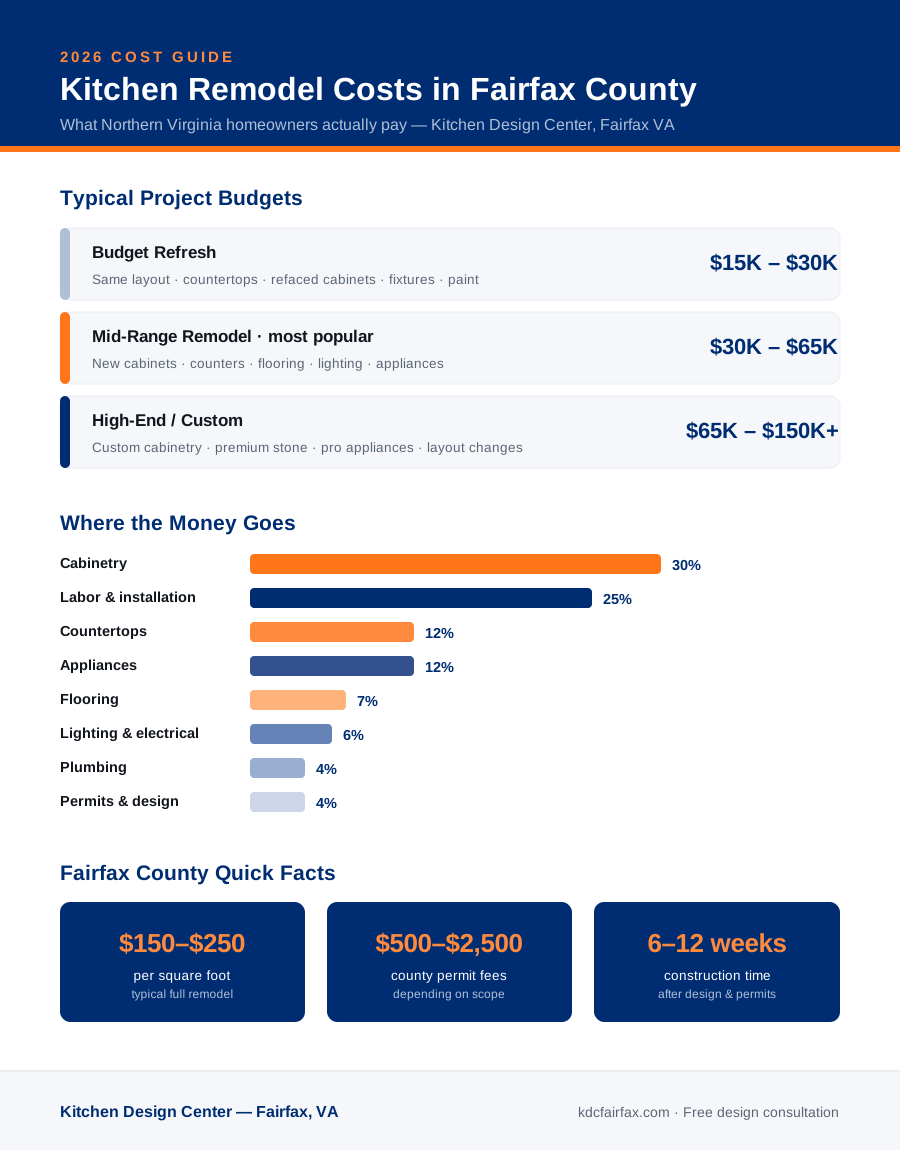
Most full kitchen remodels in Fairfax County land between $35,000 and $95,000 in 2026. Northern Virginia pricing runs meaningfully above the national average — skilled trades here command premium rates, material logistics cost more inside the Beltway market, and permit fees in Fairfax County typically add $500 to $2,500 depending on scope.
Here’s how the market breaks down by project level:
| Project Level | Typical Cost (2026) | What’s Included |
|---|---|---|
| Budget refresh | $15,000 – $30,000 | Same layout; new countertops, refaced or repainted cabinets, new fixtures, backsplash, paint |
| Mid-range remodel | $30,000 – $65,000 | New semi-custom cabinets, new countertops, flooring, lighting, appliances; moderate plumbing/electrical |
| High-end remodel | $65,000 – $150,000+ | Custom cabinetry, premium stone, professional-grade appliances, layout or structural changes |
The single most useful number for early planning is the per-square-foot range: $150 to $250 per square foot for a full remodel in Northern Virginia. Measure your kitchen, multiply, and you have a sanity check for every quote you receive.
Cost by Kitchen Size
Square footage drives cost more directly than almost any other factor, because nearly every line item — cabinets, counters, flooring, lighting — scales with it.
| Kitchen Size | Square Feet | Typical 2026 Cost Range |
|---|---|---|
| Small (galley, condo) | Under 100 sq ft | $15,000 – $45,000 |
| Medium (most townhomes) | 100 – 150 sq ft | $25,000 – $65,000 |
| Large (single-family) | 150 – 200 sq ft | $50,000 – $100,000 |
| Open concept / great room | 200 – 300+ sq ft | $100,000 – $150,000+ |
Two notes on reading this table. First, the ranges overlap because scope matters as much as size — a small kitchen with custom cabinets and quartzite can out-cost a large kitchen with stock cabinets and laminate. Second, open-concept conversions sit in their own category because they usually involve removing walls, which brings structural, electrical, and HVAC work that has nothing to do with the kitchen finishes themselves.
Typical kitchens we see across the county: condo and townhome kitchens in Alexandria and Arlington often fall in the small-to-medium band; single-family colonials in Burke, Springfield, and Annandale mostly have medium-to-large kitchens; and newer or custom homes in Vienna, Oakton, and Great Falls frequently involve the large and open-concept categories.
The Complete Budget Breakdown: Where Every Dollar Goes
When we build an estimate, it’s a line-item document, not a lump sum. Here’s how a typical Fairfax County kitchen budget distributes in 2026:
| Category | Share of Budget | On a $60,000 Project |
|---|---|---|
| Cabinetry | 25 – 35% | $15,000 – $21,000 |
| Labor & installation | 20 – 30% | $12,000 – $18,000 |
| Countertops | 10 – 15% | $6,000 – $9,000 |
| Appliances | 10 – 15% | $6,000 – $9,000 |
| Flooring | 5 – 8% | $3,000 – $4,800 |
| Lighting & electrical | 5 – 7% | $3,000 – $4,200 |
| Plumbing & fixtures | 3 – 5% | $1,800 – $3,000 |
| Backsplash & paint | 2 – 4% | $1,200 – $2,400 |
| Permits & design fees | 2 – 4% | $1,200 – $2,400 |
Let’s walk through the big categories one at a time, because each one contains decisions worth thousands of dollars.
Cabinetry: The Biggest Line Item, and the Biggest Lever
Cabinets are where quality differences are most visible ten years after installation — doors that still close true, drawers that still glide, finishes that haven’t yellowed. It’s also where the price spread is widest. The industry divides kitchen cabinets into three grades:
| Cabinet Grade | Typical Cost (full kitchen, 2026) | What You Get |
|---|---|---|
| Stock | $5,000 – $15,000 | Pre-manufactured in fixed sizes (3-inch increments); limited door styles and finishes; fastest availability |
| Semi-custom | $12,000 – $30,000 | Standard boxes with modification options — depths, heights, custom finishes, upgraded interiors and soft-close hardware |
| Custom | $25,000 – $60,000+ | Built to your kitchen’s exact dimensions; any wood, finish, or configuration; furniture-grade joinery and inset doors available |
For most Fairfax County homes, semi-custom is the sweet spot. It offers far more flexibility than stock — enough to handle the quirks of a 1970s colonial or a 1990s builder home — without the full custom price. We carry cabinet lines at multiple price points in our Fairfax showroom specifically so homeowners can compare grades side by side with their hands on the doors, not from a catalog photo.
One more cabinet decision with budget impact: if your existing cabinet boxes are structurally sound and you like your layout, refacing (new doors, drawer fronts, and veneer over existing boxes) typically costs 40–50% less than replacement. It’s the single biggest saving available in a budget refresh.
Countertops: Material Choice Is Everything
Countertops usually run 10–15% of the budget, but the material decision swings the number dramatically. Here’s what countertop materials cost installed in Northern Virginia in 2026:
| Material | Installed Cost per Sq Ft | Notes |
|---|---|---|
| Laminate | $25 – $50 | Budget option; vastly improved patterns vs. a decade ago |
| Butcher block | $40 – $90 | Warm look; needs periodic sealing |
| Granite | $45 – $100 | Natural stone; every slab unique; excellent durability |
| Quartz (engineered) | $55 – $120 | Most popular choice in 2026; non-porous, low maintenance |
| Porcelain | $60 – $120 | Thin, heat-proof, increasingly popular for full-slab backsplashes |
| Quartzite | $80 – $180 | Natural stone with marble looks and granite hardness |
| Marble | $75 – $200+ | Beautiful, but soft and porous; best for low-traffic use |
A typical Fairfax County kitchen needs 40–60 square feet of counter surface. That means the same kitchen can carry a $2,000 laminate top or a $10,000 quartzite installation. Quartz remains the volume leader for good reason — it delivers stone looks with zero sealing and strong stain resistance — but we’ve watched quartzite steadily take share in the upper-middle and luxury segments.
Our standing advice: never pick stone from a website photo. Slabs vary enormously, even within the same product name. Come see full slabs in person — it’s the cheapest insurance you’ll ever buy against a five-figure regret.
Appliances: Set a Tier and Stay Disciplined
Appliance budgets are where scope creep most often begins. A realistic framework:
- Standard tier ($3,000 – $8,000 total): Reliable name-brand packages. Perfectly good kitchens are built at this tier every day.
- Premium tier ($8,000 – $20,000): Counter-depth refrigeration, dual-fuel or induction ranges, better sound-rated dishwashers, drawer microwaves.
- Professional tier ($20,000 – $60,000+): 48-inch ranges, built-in column refrigeration, panel-ready everything, wine storage, steam ovens.
The discipline point: appliances should follow the kitchen’s overall tier. A $15,000 range in a $45,000 kitchen is a mismatch that neither cooks better nor appraises better.
Flooring: The Quiet Workhorse of the Budget
Flooring takes 5–8% of a typical budget, and in 2026 the Fairfax County market has settled around four main options. Luxury vinyl plank (LVP) at $6–$12 per square foot installed has become the volume leader for busy family kitchens — fully waterproof, convincing wood visuals, and comfortable underfoot. Engineered hardwood at $10–$18 installed is the choice when the kitchen flows into hardwood living areas and continuity matters. Porcelain tile at $12–$25 installed remains the durability champion, and large-format tiles with tight grout lines have modernized its look considerably. Site-finished solid hardwood at $12–$22 installed is still specified in higher-end projects, especially where existing floors elsewhere in the home will be refinished to match.
One cost note that surprises homeowners: if your existing floor was installed around the old cabinets rather than under them, changing the cabinet layout exposes bare subfloor in the old footprint. That’s not a contractor upsell — it’s geometry — and it’s another quiet argument for keeping your layout if the budget is tight.
Lighting and Electrical: Small Line, Big Impact
Lighting runs 5–7% of the budget and delivers more perceived quality per dollar than almost anything else. A proper 2026 kitchen lighting plan has three layers: recessed ambient lighting on dimmers ($150–$250 per fixture installed), under-cabinet task lighting ($20–$40 per linear foot for quality LED strip), and decorative fixtures over the island and table ($200–$2,000+ each, entirely driven by your taste).
The electrical work behind the walls matters more than the fixtures. Modern kitchens demand dedicated circuits for each major appliance, GFCI protection at counters, and frequently a subpanel upgrade in homes built before the 1980s. This is exactly the work where Fairfax County’s inspection regime earns its keep — and where the $90–$130/hour master electrician is worth every dollar.
Backsplash and Paint: The Finishing 2–4%
The backsplash budget spans from $800 for a classic subway-tile install to $4,000+ for a full-height slab or handmade zellige tile. Our 2026 observation: full-height slab backsplashes (running the countertop material up the wall) have moved from luxury-only into upper-mid-range projects, because they eliminate grout maintenance and read as dramatically more expensive than they are. Paint is the smallest line on the sheet — but insist on scrubbable kitchen-grade finishes; the cheap-paint savings disappears with the first marinara splash.
Labor: Why Northern Virginia Costs What It Costs
Labor accounts for roughly 20–30% of a full remodel, and it’s the component you can least afford to economize on. Fairfax County trade rates in 2026:
| Trade | Typical 2026 Rate |
|---|---|
| Licensed master electrician | $90 – $130+ per hour |
| Licensed plumber | $100 – $150 per hour |
| Cabinet installer | $70 – $110 per hour |
| Tile setter | $60 – $100 per hour |
| General demolition/labor | $40 – $70 per hour |
These rates are well above national averages, and they’re the honest reason a Fairfax County kitchen costs 30–40% more than the same kitchen in, say, the Midwest. The flip side: Northern Virginia’s licensing and inspection regime is rigorous, and the quality floor is genuinely higher.
A warning from long experience: the cheapest labor quote is usually the most expensive decision in the entire project. Unlicensed or under-insured crews create failed inspections, insurance gaps, and rework that routinely erases every dollar saved — and then some.
Permits in Fairfax County: What You Need and What It Costs
Cosmetic work — paint, backsplash, swapping a faucet in the same location — doesn’t require a permit. But most real remodels do. Fairfax County Land Development Services requires permits when a project:
- Moves or adds plumbing (sink relocation, new pot filler, moving a dishwasher)
- Modifies electrical circuits (new appliance circuits, relocated outlets, recessed lighting)
- Alters or extends gas lines
- Removes or modifies any wall, load-bearing or not
- Changes HVAC, including new range hood ducting
Budget $500 to $2,500 for permit fees depending on scope, and 2–4 weeks for plan review on typical residential kitchen projects. Load-bearing wall removal adds engineering drawings to the requirement list.
Two things homeowners should know. First, permits protect you: unpermitted work surfaces during resale inspections and appraisals, and buyers’ agents in this market know exactly what to look for. Second, a reputable remodeler handles the entire permit process — if a contractor suggests “skipping the permit to save time,” that tells you everything you need to know about how they’ll handle the parts of the job you can’t see.
Layout Changes: The Decision That Doubles Budgets
If there’s one fork in the road that separates $40,000 kitchens from $90,000 kitchens, it’s this: does anything move?
Keeping your current footprint means plumbing stays, gas stays, and most electrical stays. Your budget flows to the things you see and touch — cabinets, counters, appliances, lighting.
Moving things triggers cascading costs:
- Relocating the sink: $2,000 – $5,000 in plumbing, plus floor patching
- Moving a gas range: $1,500 – $4,000 depending on line routing
- Removing a non-load-bearing wall: $3,000 – $8,000 including electrical rerouting, patching, and flooring transitions
- Removing a load-bearing wall: $10,000 – $25,000+ with engineering, beam installation, and permits
None of this means layout changes are wrong — an open-concept conversion can transform how a house lives, and in many of the 1960s–80s colonials common in Falls Church and Annandale, it’s the highest-impact move available. It just needs to be a deliberate decision made with full knowledge of what it costs, not something discovered mid-project.
Hidden Costs: What the Walls Are Hiding
Every honest cost guide needs this section. When demolition opens walls in an older home, these are the surprises we encounter most often in Fairfax County housing stock:
- Outdated wiring (aluminum branch circuits in some 1960s–70s homes, insufficient amperage for modern appliance loads): $2,000 – $8,000 to correct
- Galvanized or polybutylene plumbing that should be replaced while walls are open: $1,500 – $6,000
- Subfloor damage from decades of slow leaks around sinks and dishwashers: $1,000 – $4,000
- Out-of-level floors and out-of-plumb walls that complicate cabinet installation: usually absorbed in labor, occasionally more
The professional answer to all of this is a contingency line of 10–15% of the project budget — 15–20% for homes built before 1980. If the contingency goes unspent, it becomes your appliance upgrade or your vacation. If it’s needed, it keeps a surprise from becoming a crisis.
The Realistic Timeline (and Why “6 Weeks” Quotes Are a Red Flag)
Money is half the planning question; time is the other half. A properly run Fairfax County kitchen remodel in 2026 looks like this:
| Phase | Duration | What Happens |
|---|---|---|
| Design & selections | 3 – 6 weeks | Measurements, layout design, cabinet/counter/finish selections, final quote |
| Cabinet lead time | 4 – 10 weeks | Semi-custom typically 5 – 8 weeks; custom 8 – 12+ (overlaps permitting) |
| Permits | 2 – 4 weeks | Plan review with Fairfax County (overlaps cabinet lead time) |
| Construction | 6 – 12 weeks | Demo, rough-ins, inspections, drywall, flooring, cabinets, counters, tile, punch list |
Total: roughly 3 to 5 months from first meeting to finished kitchen. Countertops deserve a special note: slabs are templated after cabinets are installed, then fabricated — that’s a built-in 1–2 week gap in every schedule, and no honest contractor can eliminate it.
Anyone quoting a full remodel “start to finish in six weeks” is either not pulling permits, not including design and lead times, or planning to learn scheduling on your project.
How Costs Vary Across Fairfax County and Nearby Areas
Labor and permit costs are consistent county-wide, but project scope tends to differ by area, because the housing stock differs:
- McLean and Great Falls: High-end custom projects are the norm — larger kitchens, custom cabinetry, premium stone, and frequent structural work. Budgets commonly start where the county’s mid-range ends.
- Vienna, Oakton, and Tysons: A mix of upscale renovations and new-construction upgrades; open-concept conversions of 1970s–90s homes are the signature project.
- Fairfax, Burke, Springfield, and Annandale: The heart of the mid-range market. Most projects work within the existing footprint, keeping budgets in the $30,000–$65,000 band.
- Falls Church and Arlington: Older, smaller homes where smart space planning matters more than raw square footage; galley reconfiguration is a specialty of ours here.
- Reston, Herndon, Centreville, and Chantilly: Strong value markets — townhome and single-family kitchens where semi-custom packages deliver dramatic transformations at mid-range prices.
Wherever you are in the county, the estimate process is identical: measure, scope, line-item quote.
Is a Kitchen Remodel Worth It in Fairfax County?
Northern Virginia remains one of the strongest, most supply-constrained housing markets in the country, and the kitchen is still the room that sells the house. Three practical observations from decades in this market:
Resale return is real but partial. A mid-range remodel typically recoups a substantial share of its cost at sale — industry studies year after year put mid-range kitchen returns well ahead of most other interior projects. You should not remodel purely as an investment; you should remodel because you’ll live in it, with resale as a meaningful secondary benefit.
An outdated kitchen is not neutral. In upper-bracket areas especially, buyers mentally deduct the cost of the remodel they’ll “have to do” — usually overestimating it. An updated kitchen doesn’t just add value; it removes a discount.
Time-on-market matters too. Homes with updated kitchens simply show better and sell faster, which has its own financial value in carrying costs and negotiating leverage.
DIY vs. Professional: An Honest Line in the Sand
Every budget conversation eventually arrives here, so let’s draw the line clearly. Work that homeowners in Fairfax County can reasonably take on themselves: painting, hardware swaps, simple backsplash tile if you’re patient, and haul-away of non-plumbed items. Work that belongs to licensed professionals, full stop: anything electrical beyond swapping a fixture, anything involving gas, anything involving supply plumbing, structural work of any kind, and countertop templating and installation.
The math is less romantic than the DIY shows suggest. Professional labor on the DIY-able portions of a kitchen totals maybe $3,000–$6,000 of a $60,000 project — about 5–10%. Meanwhile, a single DIY plumbing connection that fails inside a wall cabinet can generate a five-figure repair and an insurance dispute about unpermitted work. Take the paint and the hardware; leave the water and the wires.
Five Costly Mistakes We See Every Year
After decades in this market, the same budget-destroying mistakes keep appearing:
- Designing around a Pinterest photo instead of a floor plan. The photo kitchen is 400 square feet; yours is 160. Good design translates the feeling, not the literal spec list.
- Ordering appliances after the cabinets. Cabinet openings are built to appliance specs. Choose appliances first (you don’t have to buy them first), or pay for cabinet modifications later.
- Skipping the site visit before signing. Any contractor willing to give you a firm price without measuring your kitchen is planning to correct that price later, in their favor.
- Treating the contingency as spending money. The 10–15% buffer is insurance, not a slush fund for upgrades at week two.
- Chasing the third-lowest bid to the bottom. Get three comparable line-item quotes and interrogate the differences — a $12,000 gap between bids is never generosity; it’s scope that’s missing from one of them.
12 Ways to Save Money Without Regretting It
- Keep the layout. The single biggest saver, worth $10,000–$30,000 versus a full reconfiguration.
- Reface instead of replace if your boxes are sound and the layout works — 40–50% cabinet savings.
- Choose semi-custom over custom unless your space genuinely demands custom dimensions.
- Pick quartz in a standard color. Exotic slabs and rare colors carry 30–80% premiums over the core palette.
- Watch appliance package promotions. Buying a suite from one brand during promotional windows routinely saves 10–20%.
- Keep one “wow” and economize around it. A statement island or a quartzite counter reads as luxury even when the perimeter is standard.
- Use full-height backsplash only where it shows. Behind the range, not behind the refrigerator.
- Do your own demolition only if you truly know what’s in the walls. Otherwise it’s false economy — see hidden costs above.
- Reuse what genuinely works. A good hardwood floor can often be refinished rather than replaced.
- Standard-size everything. Custom range hoods, odd-size fridges, and non-standard sinks each carry a premium.
- Order 10% extra tile and flooring up front. Shortage reorders cost more than surplus material.
- Get a line-item quote and compare like for like. The cheapest lump-sum bid usually hides scope gaps you’ll pay for later as change orders.
Budgeting and Paying for the Project
A few practical norms so nothing surprises you. Reputable remodelers in Northern Virginia work on progress-based payment schedules — typically a deposit at contract (often tied to cabinet ordering), staged payments at defined milestones (demo complete, rough-in inspections passed, cabinets installed), and a final payment only at punch-list completion. Be cautious of any contractor requesting a majority of funds up front.
On financing: many homeowners fund remodels with home equity products, and some cabinet and remodeling firms offer project financing. We’re not financial advisors and won’t tell you how to fund your project — but we will say that the line-item quote you should demand from any contractor is also the document a lender will want to see.
How to Vet the Contractor (a Fairfax County Checklist)
- Virginia Class A contractor’s license, verified on the DPOR website — not just claimed
- General liability insurance and workers’ comp certificates, current, in the company’s name
- A physical showroom or office you can visit (fly-by-night operations don’t sign leases)
- Local references from the last 12 months, in your part of the county
- Written line-item quotes, written change-order process, written warranty
- They pull the permits, in their name, every time
We built our Fairfax showroom around this checklist on purpose. Come in, touch the cabinet doors, see full slabs, meet the designers who will draw your kitchen — that transparency is the whole point.
When Should You Start? Timing Your Project
There’s a rhythm to the remodeling year in Northern Virginia, and it affects both price and schedule. Demand peaks from late spring through early fall — homeowners want kitchens done before the holidays, and every contractor’s calendar fills accordingly. Projects signed in this window wait longer to start and have less scheduling flexibility.
The counterintuitive sweet spot is late fall and winter. Design in November, order cabinets in December, permit over the holidays, and construction starts in January when trade calendars are open. Winter projects routinely move faster simply because the crews aren’t split across six jobs, and some suppliers run year-end promotions on cabinet lines and appliances. If your kitchen must be ready for a specific event — a graduation party, a listing date — work backward from that date using the timeline table above, then add a month of margin. Kitchens finish on time when the schedule has slack; they finish late when every step is load-bearing.
One more timing note specific to selling: if a remodel is part of your pre-listing plan, start the design conversation six to nine months before your target list date. We regularly get calls in March from sellers hoping to list in May, and the honest answer is that the calendar has already decided.
The Bottom Line
A realistic 2026 planning framework for Fairfax County: measure your kitchen, multiply by $150–$250 per square foot for a full-scope baseline, place yourself honestly in one of the three tiers ($15K–$30K refresh, $30K–$65K mid-range, $65K+ high-end), add 10–15% contingency, and plan 3–5 months end to end. Every number in your project will trace back to five decisions: layout, cabinet grade, counter material, appliance tier, and who does the work. Control those five deliberately, and the budget takes care of itself.
Get a Real Number for Your Kitchen
Everything above gives you ranges; your kitchen deserves a number. The fastest way to get one is a free design consultation: we measure your space, talk through scope and materials at whatever budget level fits your plans, and produce a detailed line-item estimate — not a vague ballpark that grows later.
Contact Kitchen Design Center to book a free consultation, or visit our Fairfax showroom to compare cabinets, countertops, and finishes in person. We serve homeowners throughout Fairfax County and Northern Virginia — and we’ve probably already remodeled a kitchen on your street.
Frequently Asked Questions
What is the average cost of a kitchen remodel in Fairfax County in 2026?
Most full kitchen remodels in Fairfax County land between $35,000 and $95,000 in 2026, with the typical mid-range project falling in the $30,000 to $65,000 band. Budget refreshes that keep the existing layout start around $15,000, while high-end custom projects with layout changes commonly exceed $100,000. Northern Virginia pricing runs meaningfully above the national average because of higher labor rates and permit costs.
How much does a kitchen remodel cost per square foot in Northern Virginia?
Expect roughly $150 to $250 per square foot for a full kitchen remodel in Northern Virginia in 2026. A 150-square-foot kitchen at that rate lands between $22,500 and $37,500 for a modest scope, and considerably more once custom cabinetry, premium stone, and layout changes enter the picture.
What is the most expensive part of a kitchen remodel?
Cabinetry is consistently the largest single line item, typically consuming 25 to 35 percent of the total budget. Labor is the second largest at roughly 20 to 30 percent. Together, cabinets and labor usually account for more than half of what you spend.
Do I need a permit to remodel my kitchen in Fairfax County?
Yes, in most cases. Cosmetic updates like painting or swapping a faucet do not require a permit, but any project that moves plumbing, modifies electrical circuits, alters gas lines, or removes walls requires permits from Fairfax County Land Development Services. Permit fees typically run $500 to $2,500 depending on scope.
How long does a kitchen remodel take in Fairfax County?
Plan on 3 to 5 months from first design meeting to finished kitchen. Design and selections take 3 to 6 weeks, cabinet lead times run 4 to 10 weeks depending on the line, permits take 2 to 4 weeks, and construction itself typically runs 6 to 12 weeks.
Is it cheaper to reface or replace kitchen cabinets?
Refacing typically costs 40 to 50 percent less than full replacement and makes sense when the cabinet boxes are sound and the layout works. If boxes are failing, storage is inadequate, or you want a new layout, replacement is the better long-term investment.
How much should I set aside for surprises during a remodel?
We recommend a contingency of 10 to 15 percent of the project budget, and 15 to 20 percent for homes built before 1980, where outdated wiring, galvanized plumbing, or hidden water damage are more likely to surface once walls are opened.
Does a kitchen remodel add value to a home in Fairfax County?
Yes. In Northern Virginia's strong housing market, a mid-range kitchen remodel typically recoups a substantial share of its cost at resale, and an updated kitchen materially shortens time on market. In upper-bracket areas like McLean and Great Falls, buyers expect a designer-grade kitchen, so an outdated one effectively discounts your asking price.