
Countertops are the decision that comes right after cabinets in nearly every kitchen or bathroom remodel we design in Fairfax County, and it’s the one that generates the most showroom debate. Quartz, granite, and quartzite all look stunning in the right kitchen, all hold up for decades when properly selected and installed, and all have passionate advocates among the homeowners who’ve lived with them. The differences that actually matter — hardness, porosity, heat tolerance, and honest maintenance — rarely get explained clearly before someone signs a slab order.
This guide is that explanation. We fabricate and install all three materials from Cambria, Silestone, MSI Surfaces, Caesarstone, and more at our Fairfax showroom, and this is the same conversation we have with homeowners standing in front of full slabs, deciding what’s going on their counters for the next twenty years.
The Short Answer
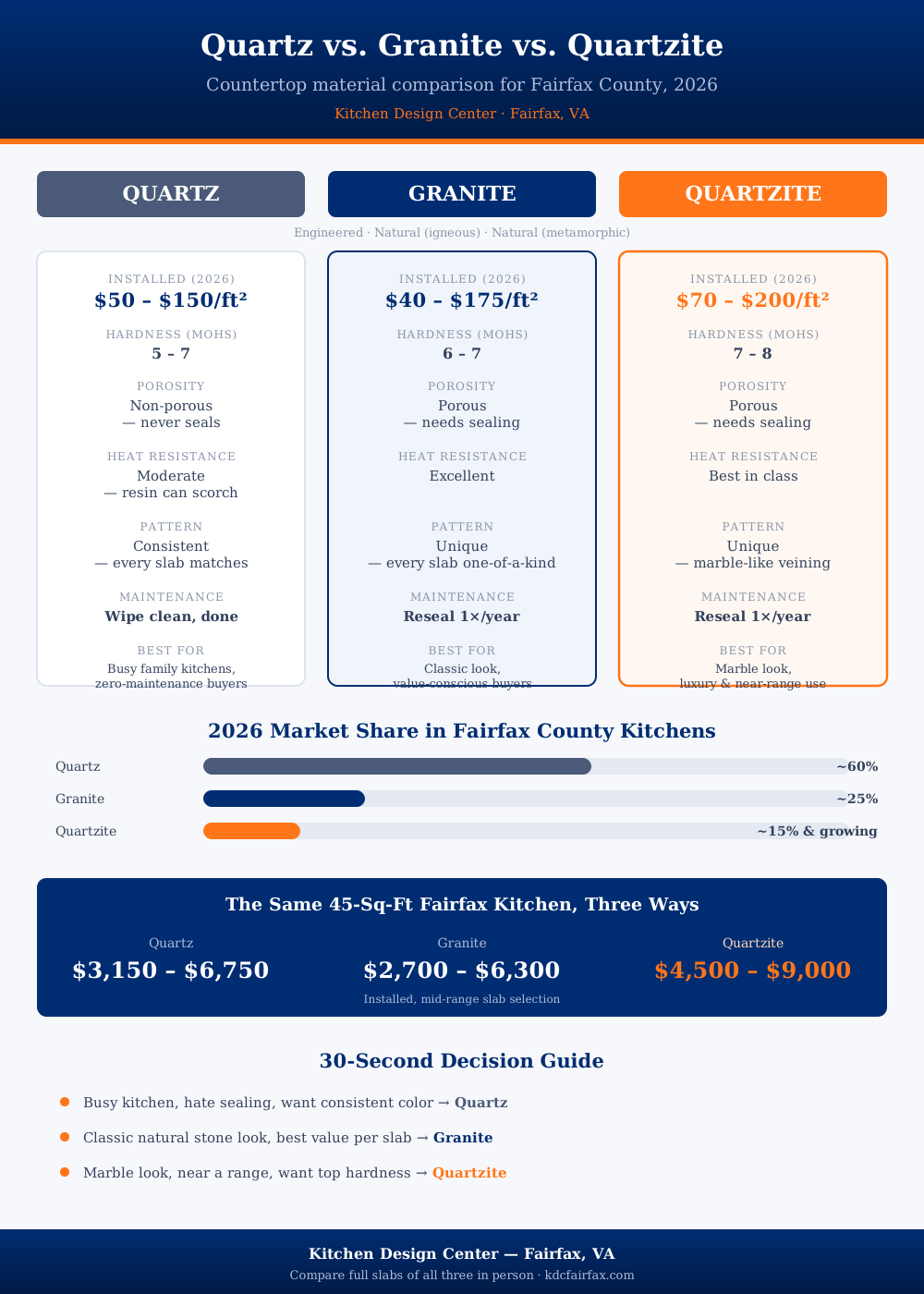
| Quartz | Granite | Quartzite | |
|---|---|---|---|
| Type | Engineered (90-95% quartz + resin) | Natural igneous stone | Natural metamorphic stone |
| Installed cost (2026) | $50 – $150/ft² | $40 – $175/ft² | $70 – $200/ft² |
| Hardness (Mohs scale) | 5 – 7 | 6 – 7 | 7 – 8 |
| Porosity | Non-porous — never seals | Porous — needs sealing | Porous — needs sealing |
| Heat resistance | Moderate — resin can scorch | Excellent | Best in class |
| Pattern | Consistent, repeatable | Unique per slab | Unique, marble-like veining |
| Maintenance | Wipe clean, done | Reseal annually | Reseal annually |
| Best for | Busy family kitchens, zero-maintenance buyers | Classic look, value-conscious buyers | Marble look, luxury kitchens, near-range use |
If you want the one-sentence version: quartz wins on convenience, granite wins on classic value, and quartzite wins on the marble look with real durability. The rest of this guide explains why, and helps you figure out which trade-off fits your kitchen.
What Each Material Actually Is
Quartz: Engineered for Consistency
Quartz countertops aren’t a natural stone at all — they’re an engineered product made from roughly 90-95% ground natural quartz mineral bound together with polymer resins and pigments, then formed under heat and pressure into slabs. That manufacturing process is exactly why quartz behaves so differently from the other two materials: the pattern is designed, not mined, which means every slab of a given color and batch looks essentially identical. If you need a large kitchen with a waterfall island and matched veining across every surface, quartz eliminates the slab-matching puzzle that natural stone can create in a big layout.
The resin content is also what makes quartz non-porous — there are no natural fissures or crystalline gaps for liquid to penetrate, so it never needs sealing and resists staining from wine, oil, and acidic foods better than either natural stone. It’s why quartz has become the default recommendation for busy family kitchens: it forgives the daily wear a natural stone would eventually show.
Granite: The Original Natural-Stone Standard
Granite is quarried, cut into slabs, polished, and installed largely as nature made it — an igneous rock formed from cooled magma, with mineral crystals (quartz, feldspar, mica, and others) that create its characteristic speckled pattern. Because it’s a natural material, every granite slab is genuinely one of a kind, and no two kitchens with granite counters look quite the same, even with the same color name on the invoice.
Granite has been the volume leader in American kitchens for decades, and for good reason: it’s hard, heat-resistant, handsome, and available across an enormous range of colors and price points, from workhorse commercial-grade slabs to rare exotic imports that rival quartzite in cost. Its porosity varies by specific slab — darker, denser granites tend to be less porous than lighter ones — which is why a full slab inspection at our showroom, rather than a sample chip, is the right way to judge any specific granite’s sealing needs.
Quartzite: Natural Stone With Marble’s Looks and More
Quartzite starts as sandstone, then gets transformed by intense heat and pressure deep in the earth — the same metamorphic process that makes marble from limestone, but starting from a harder parent material. That origin gives quartzite its defining trait: the soft, flowing veining of marble, with hardness that meets or beats granite. It’s the material that lets homeowners get the marble look they fell in love with on Pinterest without marble’s notorious softness and staining vulnerability.
Quartzite is also the material most frequently mislabeled at the low end of the market — some slabs sold as “quartzite” are actually dolomitic marble or other softer stones with a similar look, which is exactly why we recommend buying quartzite only from a showroom that can show you slab certification and origin, not just a swatch.
The Cost Comparison in Detail
| Material | Typical 2026 Cost (installed) | 45 Sq Ft Kitchen (mid-range) |
|---|---|---|
| Granite | $40 – $175/ft² | $2,700 – $6,300 |
| Quartz | $50 – $150/ft² | $3,150 – $6,750 |
| Quartzite | $70 – $200/ft² | $4,500 – $9,000 |
A few things worth understanding about why these ranges are so wide. Granite’s range is the widest of the three because it spans everything from common commercial-grade slabs quarried in volume to rare exotic imports with dramatic veining — the material name “granite” covers an enormous span of rarity and cost. Quartz’s range is driven by brand and collection tier rather than rarity, since every quartz slab is manufactured — premium collections from brands like Cambria or the designer lines from Silestone and Caesarstone cost meaningfully more than entry tiers, even though the underlying material composition is similar. Quartzite consistently runs the highest because it’s both a natural, individually quarried material and the hardest of the three to fabricate — cutting and polishing quartzite dulls tooling faster than granite, which shows up directly in labor cost.
As a rule of thumb worth remembering: budget $20-$30 more per square foot for quartzite than a comparable granite selection. That premium buys real hardness and the marble aesthetic — it’s not just brand markup.
Hardness and Durability: What the Numbers Actually Mean
| Material | Mohs Hardness | What This Means Day to Day |
|---|---|---|
| Quartz | 5 – 7 | Resists most scratches; resin component is the softer link |
| Granite | 6 – 7 | Excellent scratch resistance from daily kitchen use |
| Quartzite | 7 – 8 | Best-in-class scratch resistance; approaches sapphire hardness |
The Mohs scale measures scratch resistance specifically, and quartzite’s 7-8 rating puts it close to some semi-precious stones — a kitchen knife dragged across quartzite by accident is far less likely to leave a mark than the same mistake on quartz or granite. That said, the practical difference between granite and quartz in normal daily use is smaller than the numbers suggest, since both comfortably shrug off cutting boards, dropped pans, and daily kitchen traffic. Quartzite’s real durability advantage shows up over decades, not in the first few years — it’s the material most likely to look brand new after twenty years of a busy family kitchen.
Heat Resistance: Where Quartz Actually Loses
This is the one category where quartz’s engineered construction works against it. The polymer resin that makes quartz non-porous and low-maintenance is also vulnerable to scorching from direct, sustained heat — a hot pan straight off the stove can discolor or even crack the resin binding, an issue neither natural stone shares to the same degree. Granite handles heat well, with the caveat that some darker, denser varieties can occasionally develop thermal stress fractures under repeated extreme heat exposure at the same spot. Quartzite is the clear heat-resistance winner, tolerating direct contact with hot cookware in a way that comfortably outperforms both alternatives.
Our practical advice, regardless of which material you choose: use a trivet or hot pad. It’s a habit that costs nothing and protects any of the three materials from the one form of damage none of them fully forgive with repeated abuse. But if your kitchen genuinely sees a lot of hot-pan-straight-to-counter moments — a serious home cook’s range-adjacent landing zone, for instance — that’s a legitimate reason to lean toward quartzite or granite over quartz for that specific area.
Porosity and Staining: The Sealing Question
| Material | Porous? | Sealing Needed | Stain Vulnerability |
|---|---|---|---|
| Quartz | No — engineered non-porous | Never | Excellent — resists wine, oil, acid |
| Granite | Yes — varies by slab | Annually (typical) | Good once sealed; varies by slab density |
| Quartzite | Yes — natural stone | Annually (typical) | Good once sealed; more porous than granite on average |
Quartz’s non-porous surface is arguably its single biggest practical advantage: there is no sealing schedule to track, no window where a forgotten reseal leaves the surface vulnerable, and no variability from slab to slab. Both natural stones require a penetrating sealer, typically reapplied about once a year, though the exact interval depends heavily on the specific slab’s density — a dense, low-porosity granite might go two years between sealings, while a more porous quartzite might need attention closer to every six months in a high-use kitchen. The test we recommend to every homeowner: put a few drops of water on the raw slab before it’s sealed, and time how long it takes to darken the stone. Faster absorption means a more porous slab that deserves more sealing discipline once it’s installed.
Pattern and Appearance: Consistency vs. Individuality
This is ultimately the most personal decision in the comparison, and it’s worth being honest that there’s no objectively correct answer. Quartz delivers predictability — order a specific color and collection, and every slab (and every remnant, and every future repair piece) matches. This matters enormously for large kitchens with waterfall islands, full-height backsplashes, or any layout where seamless visual continuity across multiple slabs is the goal.
Granite and quartzite both deliver individuality — no two slabs are identical, which is precisely their appeal to homeowners who want a countertop that reads as a natural material rather than a manufactured product. The trade-off is that slab selection becomes a real design step: you’re not choosing a color from a swatch book, you’re walking a slab yard or showroom floor and picking the actual piece of stone that will sit in your kitchen, then confirming bookmatching and seam placement before fabrication begins. We treat this step as non-negotiable for natural stone — a homeowner who orders granite or quartzite sight-unseen from a sample chip is gambling on a material where the whole point is that every piece is different.
Which One for Which Kitchen? A Fairfax County Field Guide
The Busy Family Kitchen — Burke, Springfield, Centreville, Annandale
Households with young kids, a lot of daily cooking, and limited patience for maintenance schedules are quartz’s strongest case. Non-porous, forgiving of red wine and tomato sauce left too long, and available in consistent colors that hide daily wear — quartz is why it has become the volume leader in mid-range Fairfax County kitchens, and it’s the material we recommend by default when a homeowner tells us their top priority is “I just don’t want to think about it.”
The Classic, Value-Conscious Remodel — Fairfax, Falls Church, Reston, Herndon
Granite remains an excellent, often underrated choice for homeowners who want genuine natural stone without quartzite’s price premium. A well-chosen granite slab in a mid-range color delivers real durability, a timeless look that has outlasted several design trend cycles, and — because granite spans such a wide price range — real flexibility to match almost any budget once you’re past entry-tier quartz.
The Luxury Kitchen — McLean, Great Falls, Vienna
Quartzite has become close to a default expectation in the luxury McLean and Great Falls market, where full-slab quartzite backsplashes and waterfall islands are one of the clearest signals of a designer-grade kitchen. Its marble-like veining photographs beautifully, its hardness holds up under heavier entertaining use, and buyers at this price point increasingly recognize and specifically request it.
The Cooking-Forward Kitchen — Anywhere with a Serious Range
If the homeowner is a genuinely serious cook — professional-grade range, frequent direct-heat exposure near the cooktop — we steer the landing zone immediately adjacent to the range toward granite or quartzite rather than quartz, regardless of what’s chosen for the rest of the kitchen. It’s a small, deliberate material split that protects the surface most likely to see a hot pan set down without a trivet.
Quartzite vs. Marble: A Clarification Worth Making
Because quartzite and marble look so similar, they get confused constantly — including, occasionally, by suppliers stretching the truth. It’s worth being explicit about the difference, since it directly affects a purchase decision often priced in the thousands of dollars. Marble is calcium carbonate — soft (3-4 on the Mohs scale), highly porous, and vulnerable to etching from anything acidic, including lemon juice and most wine. Quartzite is silicon dioxide — the same mineral composition as quartz and granite, formed through a completely different geological process than marble, and dramatically harder and more resistant to etching. They can look nearly identical in photographs, which is exactly why “quartzite” is one of the more frequently mislabeled materials in the countertop industry — some slabs marketed as quartzite are actually a harder variety of marble called dolomite, which splits the difference in both appearance and durability.
The practical takeaway: if a slab is being sold as quartzite, ask to see documentation of its geological origin, or do a simple field test — a steel blade won’t scratch true quartzite but will leave a mark on marble or dolomite. Any reputable showroom, including ours, should welcome that question rather than deflect it.
Common Myths Worth Retiring
“Quartz is real stone.” Not quite — it’s roughly 90-95% ground natural quartz mineral, but the resin binder that holds it together and the manufacturing process that forms it into slabs make it a genuinely different material from natural stone, with different strengths and different vulnerabilities (heat, specifically).
“Granite always needs constant sealing or it will stain immediately.” Modern penetrating sealers last far longer than the sealers of a decade ago, and many granite slabs go a full year or more between applications without issue. The annual reseal is prudent maintenance, not a race against imminent staining.
“Quartzite is indestructible.” It’s the hardest of the three materials discussed here, but it’s still a porous natural stone that can stain if left unsealed, and it can chip at an unsupported edge under a sharp impact, just like granite can. “More durable” doesn’t mean “impervious.”
“All quartz brands are basically the same.” Resin content, pigment quality, and manufacturing process vary meaningfully between brands, which is why a premium collection from a brand like Cambria or Caesarstone genuinely differs in depth of color and consistency from a budget-tier import — it’s not purely marketing.
Edge Profiles, Finishes, and the Details That Add Cost
The material is the headline decision, but the finishing details move the final number too, regardless of which of the three you choose. Edge profiles range from a standard eased edge (included in most quotes) to a bullnose, ogee, or waterfall edge that can add $10-$40 per linear foot depending on complexity. Surface finish matters as well — the glossy polished finish is standard and least expensive; a honed (matte) finish, increasingly popular for a softer, more contemporary look, typically costs slightly more and, on natural stone, can affect stain resistance since a honed surface has marginally more exposed porosity than a polished one. Backsplash height is another variable — a standard 4-inch backsplash is usually included in a countertop quote, while a full-height slab backsplash (running the material to the upper cabinets) is priced as additional square footage, often $1,500-$4,000 depending on the wall area covered.
None of these add-ons change the fundamental quartz-vs-granite-vs-quartzite decision, but they’re worth pricing into your budget conversation from the start rather than discovering them as line items after you’ve already committed to a slab.
Remnants: The Overlooked Way to Save on Any Material
Every fabricator accumulates remnants — leftover pieces from larger slab orders — and they’re one of the best-kept secrets in countertop shopping across all three materials. A remnant large enough for a powder room vanity, a small wet bar, or a laundry room counter can cost a fraction of ordering a full new slab, since the fabricator is recovering value from material that would otherwise go to waste. The trade-off is selection: you’re choosing from what’s currently in the remnant rack rather than the full catalog, and availability changes constantly. If you have a small secondary surface in your project — a bathroom vanity, a mudroom bench, a bar top — it’s always worth asking what’s in the remnant pile before ordering a new slab specifically for it.
Sustainability Considerations
For homeowners weighing environmental impact alongside the other factors, the three materials differ in relevant ways. Granite and quartzite are quarried, which involves real extraction impact, but the finished material requires no manufacturing beyond cutting and polishing, and both are effectively permanent — a granite or quartzite countertop removed from one kitchen can often be repurposed rather than landfilled. Quartz requires a manufacturing process involving resin (a petroleum-derived product), which carries its own footprint, though quartz manufacturing is generally more resource-efficient per square foot than stone quarrying and transport, and many quartz manufacturers now use a meaningful percentage of recycled content in their slabs. Neither category has a clean sustainability win over the other — it depends which factors (extraction impact, manufacturing footprint, longevity, recyclability) matter most to you.
Five Mistakes We See Homeowners Make
1. Choosing quartz for a range-adjacent landing zone without a heat-management plan. If hot pans regularly land right off the stove, that specific zone deserves either a trivet habit or a material better suited to direct heat.
2. Selecting natural stone from a sample chip instead of the actual slab. A 4-inch sample cannot show you the veining, movement, or color variation across a full slab — always view (or at minimum photo-review) the specific slab being cut for your kitchen.
3. Skipping the slab layout approval step. Fabricators can show you exactly where seams will fall and how veining will flow across an island or waterfall edge before cutting — skipping this step is how homeowners end up with a seam or a pattern break in a spot they wish they’d caught earlier.
4. Assuming quartzite means zero maintenance because it’s so hard. Hardness protects against scratches and heat, not against staining — quartzite still needs the same sealing discipline as granite.
5. Matching the material to a trend photo instead of the household’s actual habits. A busy family that never seals anything on schedule will be happier with quartz regardless of what’s trending in the latest kitchen renovation photos.
Bathroom Vanities: The Same Decision, Lower Stakes
Everything above applies to bathroom vanity tops too, but the stakes are lower because bathrooms see far less heat exposure and daily abrasion than kitchens. This is exactly why bathroom vanities are one of the easiest places to justify a premium material upgrade — a quartzite or high-end quartz vanity top adds only a modest dollar amount to a bathroom remodel budget because the surface area is so much smaller than a kitchen, typically 6-15 square feet versus a kitchen’s 40-60. If quartzite was out of reach for the whole kitchen, the vanity is often where it becomes affordable.
Fabrication and Installation: Why the Material Changes the Labor Too
Hardness cuts both ways — it protects the finished countertop, but it also makes fabrication slower and more demanding. Quartzite in particular dulls cutting and polishing tooling faster than granite or quartz, which is reflected directly in labor pricing and is a meaningful part of why quartzite consistently costs more even when the raw slab price is comparable to granite. This is also why fabricator experience matters more with quartzite than with the other two materials — a shop without quartzite-specific tooling and technique can produce chipped edges or uneven polish that wouldn’t happen with granite or quartz. When comparing quotes, ask specifically about the fabricator’s quartzite experience, not just their general countertop experience.
Comparing Brands at Our Showroom
We carry full-size samples and slabs from the major brands across all three material categories, so you can compare them side by side rather than guessing from a website photo — critically important for natural stone especially, where photographs never fully capture veining and depth. Our current lineup includes engineered quartz from Cambria, Silestone, Caesarstone, and LX Hausys’s Viatera line; the ultra-compact surfaces of Dekton; and natural stone and quartz selections from MSI Surfaces, Astra Surfaces, and Venezia Surfaces. Between these brands, we cover the full range from entry-level quartz to rare quartzite imports, all available to see, touch, and compare against your cabinet and flooring selections in person.
Resale Value: What Buyers Actually Notice
Countertop material rarely makes or breaks a sale on its own, but it does shape a buyer’s first impression of a kitchen’s overall quality tier, and the expectations differ by price bracket across Fairfax County.
In the county’s core mid-range market — Fairfax, Burke, Springfield, and Annandale — quartz has become close to the assumed default, and its presence signals “recently updated” more than any specific luxury cue. A buyer touring these price points expects quartz or a comparable engineered surface and rarely asks follow-up questions about it.
In the upper-bracket markets — McLean, Great Falls, and increasingly Vienna and Oakton — quartzite has shifted from differentiator to expectation in listings above a certain price point, particularly when it appears as a full-slab backsplash or waterfall island. Buyers’ agents in this segment are specifically trained to notice it, and its absence in an otherwise updated luxury kitchen can read as a missed opportunity rather than a neutral choice.
Granite retains solid, broad-market acceptance everywhere, without the specific “wow” signal quartz or quartzite can deliver, but also without any real downside — a well-chosen granite slab never reads as dated the way some other 2000s-era kitchen finishes have. It remains the safest all-around choice for a value-focused remodel intended for resale within the next few years, precisely because it doesn’t polarize buyer opinion the way material trends sometimes do.
How Countertop Choice Interacts With Your Cabinet Decision
Material and cabinet grade tend to travel together in a well-composed kitchen, which is worth considering alongside our cabinet grade comparison. A stock or entry semi-custom cabinet paired with a premium quartzite slab can look visually mismatched — the countertop reads as more expensive than the boxes beneath it, which draws attention to the gap rather than elevating the whole room. The reverse pairing, custom cabinetry with a builder-grade laminate or entry-tier granite, undersells the cabinetry investment in the same way.
The practical guideline we use at the design table: let your cabinet grade set the countertop tier, not the other way around. Stock or value semi-custom cabinets pair naturally with mid-tier quartz or granite. Upper semi-custom and custom cabinetry can comfortably carry a premium quartz collection or a genuine quartzite slab, since the two investments read as intentionally matched rather than accidentally mismatched. This isn’t a hard rule — a deliberately restrained cabinet palette with one dramatic quartzite island is a legitimate and popular design move — but it should be a choice, not an accident of shopping the two categories independently.
The Bottom Line
There’s no universally “best” countertop material among these three — there’s only the best material for your specific kitchen, budget, and tolerance for maintenance. Choose quartz if low maintenance and consistent pattern matter most and you’re comfortable using a trivet near the stove. Choose granite if you want genuine natural stone, excellent durability, and the widest price flexibility. Choose quartzite if you want marble’s beauty with real hardness, you’re prepared for annual sealing, and the budget supports the premium.
Photos and swatches only go so far with a decision this tactile and visual — the depth, veining, and sheen of a slab feel completely different in person than on a screen. Visit our Fairfax showroom to compare full slabs of quartz, granite, and quartzite side by side, and book a free design consultation to find the right material for your kitchen or bathroom. We serve homeowners throughout Fairfax County and Northern Virginia with full countertop fabrication and installation — and we’ve probably already installed the exact material you’re considering somewhere on your street.
Frequently Asked Questions
What is the difference between quartz, granite, and quartzite?
Quartz is an engineered stone made from roughly 90-95% ground natural quartz mixed with resin, giving it a consistent pattern and non-porous surface. Granite is a natural igneous rock quarried in slabs, with unique mineral patterns and moderate porosity. Quartzite is a natural metamorphic rock — sandstone transformed by heat and pressure — that combines marble-like veining with hardness that exceeds granite. All three are excellent countertop materials; the right choice depends on maintenance tolerance, heat exposure, and the look you want.
How much do quartz, granite, and quartzite countertops cost in 2026?
In Fairfax County in 2026, quartz runs $50-$150 per square foot installed, granite runs $40-$175 per square foot, and quartzite runs $70-$200 per square foot. For a typical 45-square-foot kitchen at mid-range selections, expect roughly $3,150-$6,750 for quartz, $2,700-$6,300 for granite, and $4,500-$9,000 for quartzite, installed.
Which countertop material is the most durable?
Quartzite is the hardest of the three, ranking 7-8 on the Mohs hardness scale versus granite's 6-7 and quartz's 5-7, which gives it the best scratch and heat resistance. However, quartz's non-porous surface makes it the most stain-resistant and lowest-maintenance day to day, even though it's technically softer. 'Most durable' depends on whether you're weighing scratch resistance, heat resistance, or stain resistance.
Do quartz countertops need to be sealed?
No. Quartz is engineered to be non-porous, so it never needs sealing — that's its single biggest maintenance advantage over both natural stones. Granite and quartzite are both porous natural stones and should be sealed roughly once a year to prevent staining, though the exact interval depends on the specific slab's porosity.
Can you put a hot pan directly on quartz, granite, or quartzite?
Quartzite handles direct heat the best of the three and can tolerate brief contact with hot cookware. Granite is also quite heat-resistant, though some darker varieties can develop thermal stress over repeated extreme heat exposure. Quartz is the most heat-sensitive because the resin binding the material can scorch or discolor from hot pans — we recommend a trivet or hot pad on quartz regardless of manufacturer heat-resistance claims.
Is quartzite more expensive than granite?
Generally yes. Quartzite typically costs $20-$30 more per square foot than a comparable granite slab, driven by its higher hardness, which makes it more difficult and time-consuming to fabricate and cut. Both are natural stone, so pricing within each category varies enormously by rarity and origin, and a common granite can still cost more than an entry-level quartzite.
Which countertop material is best for resale value in Fairfax County?
Quartz remains the safest resale choice in most Fairfax County price brackets because buyers recognize it as the modern low-maintenance standard. In upper-bracket markets like McLean and Great Falls, quartzite has become a strong secondary expectation because of its marble-like appearance, and a well-chosen quartzite slab can read as a luxury upgrade that quartz doesn't quite match.